
KEEP YOUR
CHICKEN FOOT PIPE
SMOKING CLEAN.
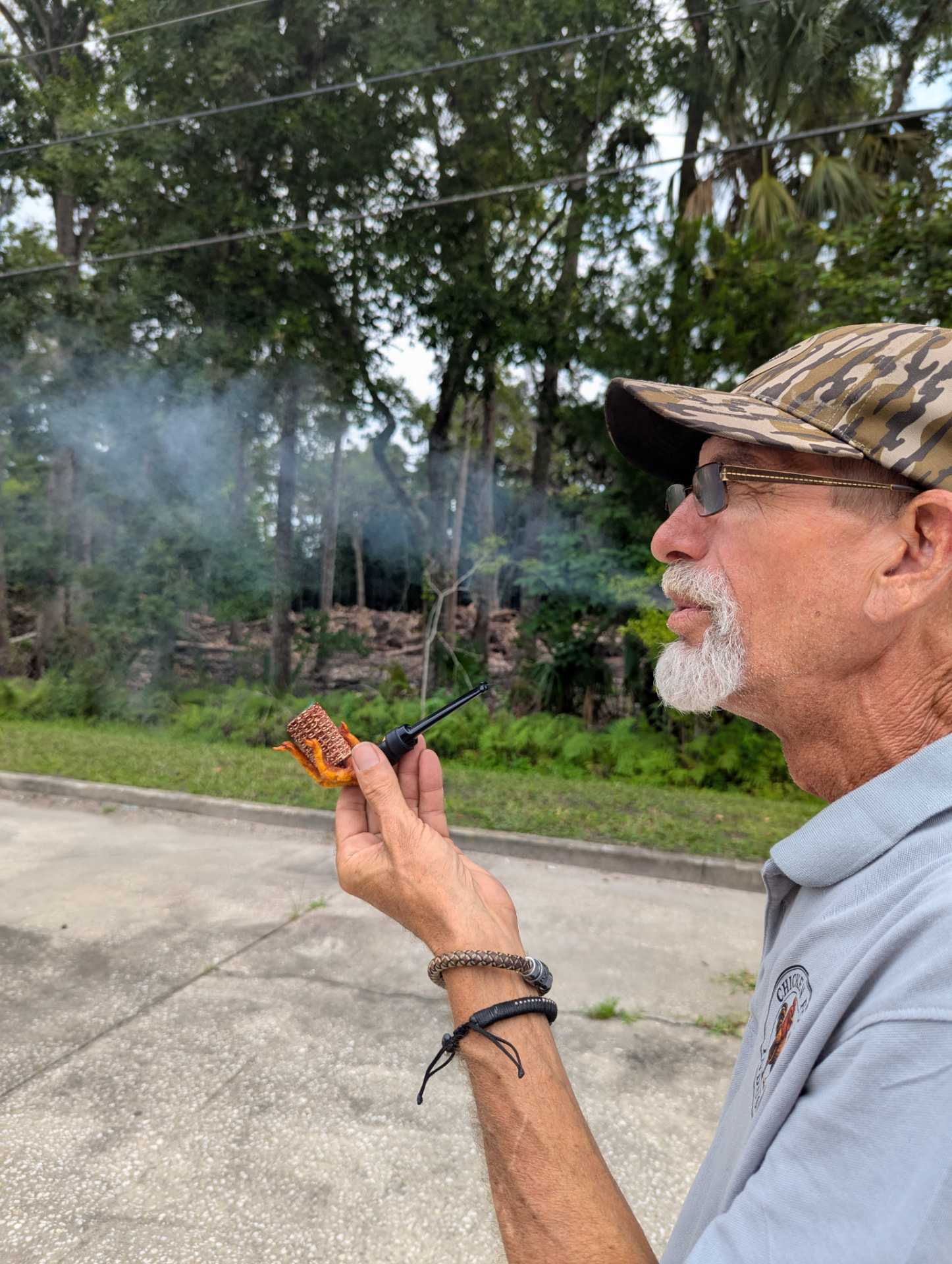
Every handmade chicken foot pipe ships with a pipe cleaner, and that plus a little isopropyl alcohol is genuinely all the upkeep it needs. Here's the routine.
FOUR STEPS, FIVE MINUTES
- 01
Let it cool
Never clean a warm pipe. Let it come all the way down to room temperature, then tap the ash and leftover dottle out of the bowl over a trash can — a gentle tap against your palm, not a hard knock against a table.
- 02
Pull the pipe cleaner through
Every pipe ships with a pipe cleaner. Feed it into the stem and, once the tip pokes out the other side, grab it with a pair of pliers and pull it entirely through. Pulling all the way through clears the whole channel instead of packing gunk deeper into it.
- 03
Hit the internals with isopropyl
Dampen — don't soak — a fresh pipe cleaner with isopropyl alcohol and pull it through the same way. Repeat with new cleaners until they come out clean. Isopropyl is the only thing that needs to touch the internals; it breaks down tar and evaporates without leaving a taste.
- 04
Dry it out
Finish with one dry pipe cleaner pulled straight through, then set the pipe somewhere with airflow and leave it alone for a few hours. A dry channel is what keeps the smoke cool and the bowl from souring.
HOUSE RULES
- ▲
Keep the foot dry
The foot is preserved and cured like leather. Wipe it with a dry cloth only — no water baths, no dishwasher, no submerging. If it gets caught in the rain, pat it down and let it air dry away from direct heat.
- ▲
Corncob bowls break in
A corncob bowl darkens and cakes as you smoke it. That layer is a good thing — scrape it back if it gets thicker than a dime, but don't strip it down to bare cob.
- ▲
Wooden bowls like a wipe
Hand-turned hardwood stays happy with an occasional dry buff. Skip oils and solvents on the outside of the bowl.
- ▲
Store it upright
Rest the pipe bowl-up somewhere dry and out of direct sun. Sun fades the scales; damp is the only thing that will actually hurt a cured foot.
- ▲
Clean cadence
A pipe cleaner after every few bowls, an isopropyl pass every couple of weeks of regular use. That's the whole routine.
FOR TOBACCO USE ONLY · 21+
SIGNED, NUMBERED, NO TWO ALIKE
Cared for right, a chicken foot pipe lasts years. Ready for a second one? Visit the shop.